Start with safety
The heat exchanger decides most of these calls. If it is cracked or rusted through, the answer is replacement, because that part separates combustion gases from the air you breathe and it is rarely worth replacing on an older furnace. We inspect it and show you what we see before any recommendation.
Then look at the size of the repair
A $250 igniter on a sound 20-year-old furnace is usually worth doing. A $1,200 inducer or blower motor on the same furnace is a closer call, especially if other parts are original too. A common rule of thumb compares the repair cost times the age of the furnace to the cost of a new one, but your own plans for the house matter more than any rule.
- Repair makes sense when the furnace is sound, the part is common and you are happy with comfort.
- Replacement makes sense when repairs are stacking up, the heat exchanger is suspect or comfort is poor.
- If you plan to sell within a year or two, a repair may be the better spend.
Efficiency and comfort
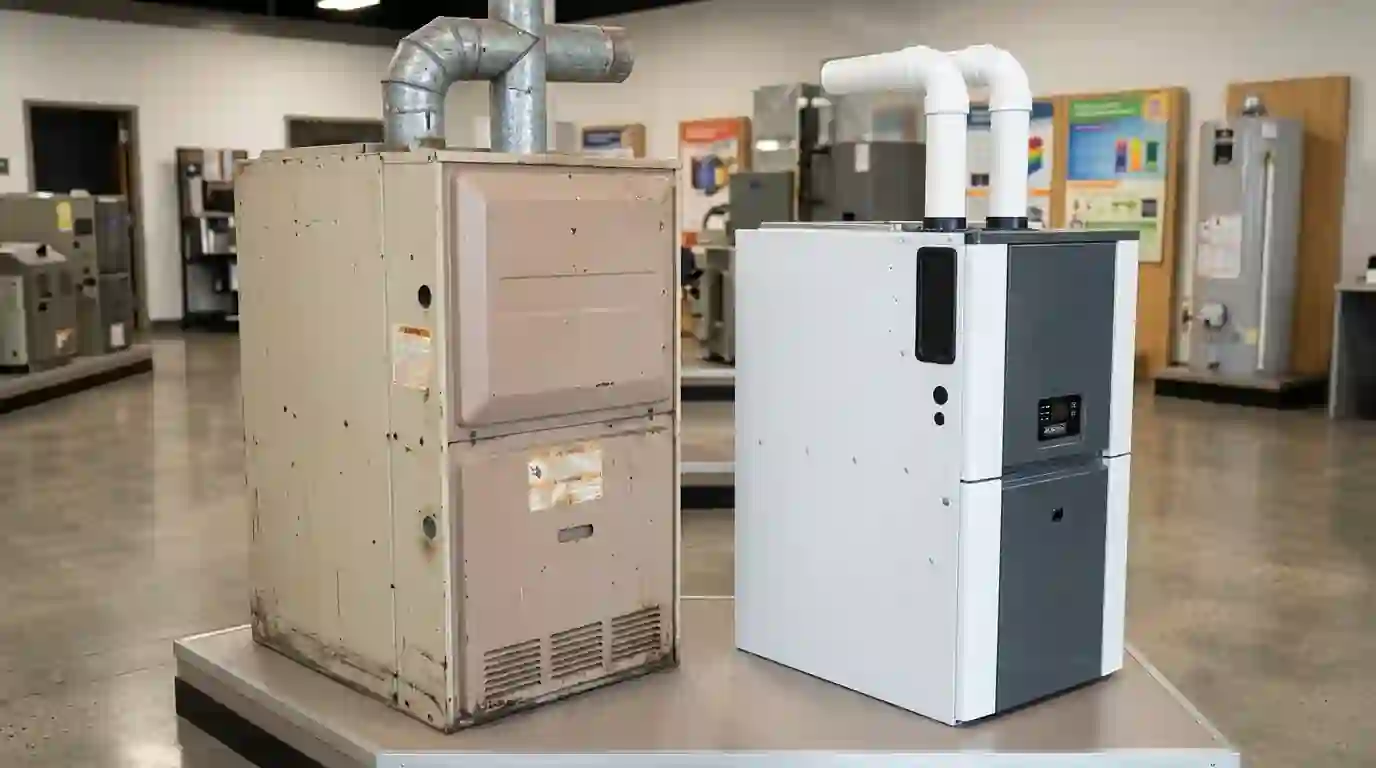
A furnace from the early 2000s is often 80 percent efficient, and many were oversized. A new 96 percent two-stage furnace sized correctly will typically use noticeably less gas in a Chicago winter and heat more evenly. If you have rooms that never warm up or a furnace that runs loud and short, that counts toward replacement.
How we handle the conversation
We give you the repair price and, if you ask, a replacement price with real options. We do not pressure anyone into a new furnace. Most of our calls end with a repair.
Answers
Quick questions
How long do gas furnaces last in Chicago?
Often 15 to 25 years with regular maintenance. Heavy use and dirty filters shorten that.
Is it worth fixing a furnace I plan to replace next year?
If the repair is modest and the furnace is safe, often yes. It buys time to plan the replacement on your schedule.