A few days before
Deep cold pushes every heating system to run nearly nonstop. Anything weak tends to fail in the first 24 hours, so a little attention ahead of time pays off.
- Put in a fresh furnace filter.
- Test the heat now: set the thermostat a few degrees higher and make sure the furnace lights and runs normally.
- Check boiler pressure or the steam sight glass.
- Make sure you have working CO alarms and fresh batteries.
- Know where your main water shutoff is.
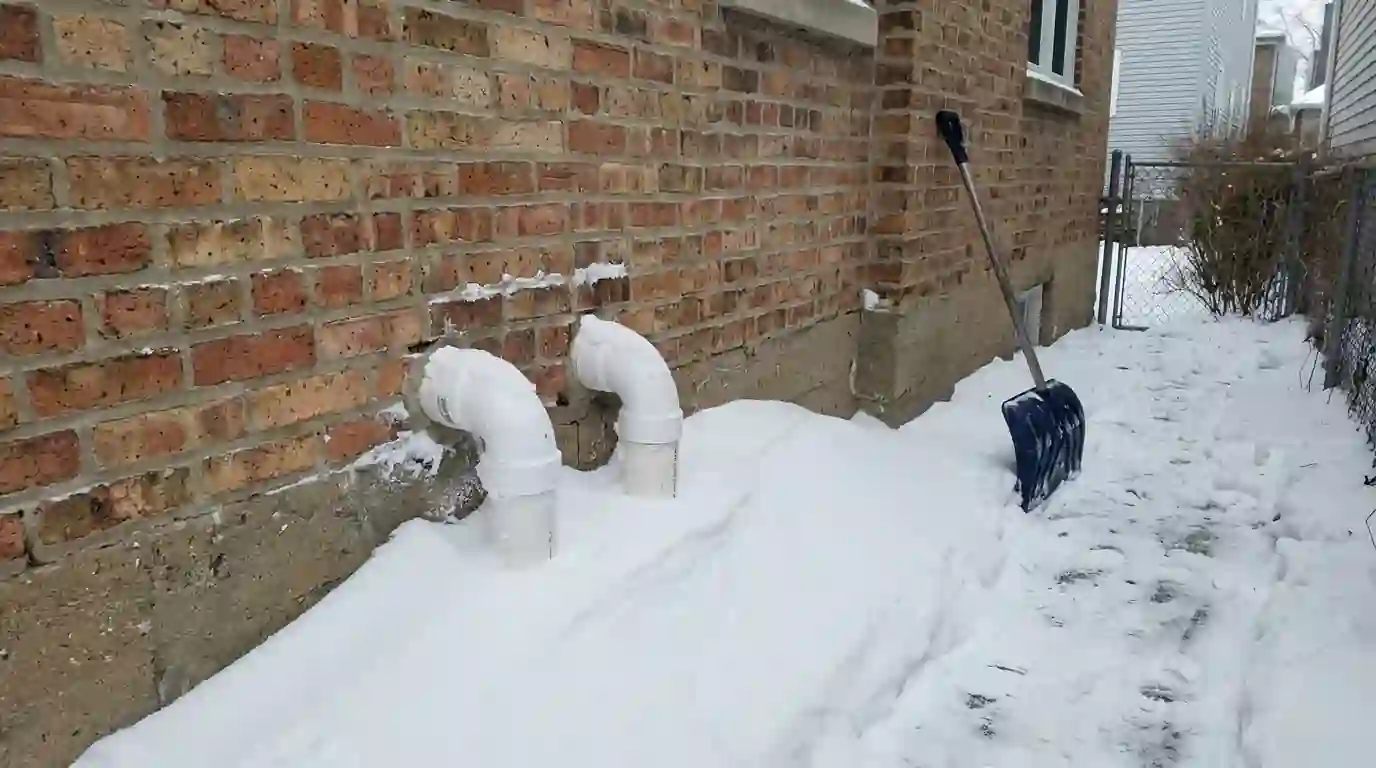
Outside the house
High-efficiency furnaces vent through white PVC pipes on the side of the house. Drifting snow and frost can block them and shut the furnace down. Clear around them after every snowfall and keep shovels and snowblowers from burying them. Clear snow away from outdoor heat pumps too, and from gas meters, which should never be covered.
Protecting the pipes
Pipes on outside walls, in crawlspaces and in unheated rear additions freeze first. Open cabinet doors under sinks on outside walls, let a faucet drip on the coldest side of the house, and keep the garage door closed if water lines run through it. Do not set the thermostat lower than usual at night during the worst of the cold.
If the heat goes out
Call right away and say the temperature inside. While you wait, keep doors to the warmest room closed, keep faucets dripping and use a space heater only in a room you are in, away from anything that can burn. Never run a generator, grill or gas oven to heat the house.
Answers
Quick questions
Should I turn my thermostat down at night during a polar vortex?
No. Keep it at your normal setting so the furnace does not have to recover from a deep setback when it is coldest.
Can extreme cold damage my furnace?
The cold itself does not, but nonstop running exposes weak parts, and blocked vents or frozen condensate lines can shut it down.