Why the air gets so dry
Cold air holds very little moisture. When that air leaks into your house and is heated, its relative humidity falls sharply. A tight house holds onto some moisture from cooking and showers, but most Chicago homes leak enough outdoor air to dry out badly in January.
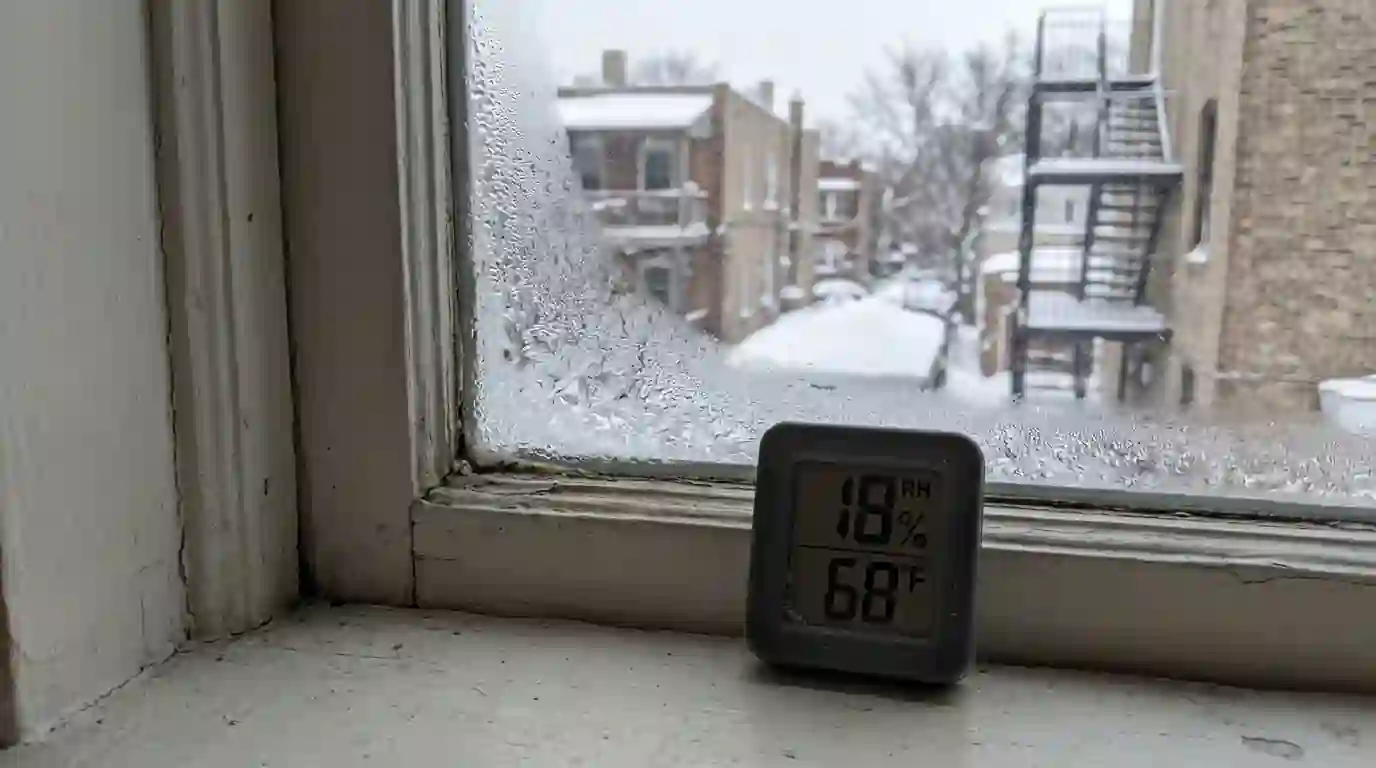
The right target changes with the weather
More humidity is not always better in a cold climate. Moist indoor air condenses on cold windows and can freeze on the glass or soak into window frames. The colder it is outside, the lower the safe indoor humidity.
- Around 35 to 40 percent when outdoor temperatures are above about 20 degrees.
- Around 30 percent from 0 to 20 degrees.
- Around 25 percent or a bit lower below zero.
- If you see condensation on the inside of windows, lower the setting.
Portable or whole-home
Portable humidifiers work in a single room but need daily filling and cleaning. A whole-home humidifier mounted on the furnace adds moisture to all the air the system moves and drains on its own. With an outdoor sensor, it lowers the target automatically as temperatures drop, which is the simplest way to avoid window condensation.
Taking care of a humidifier
Evaporative humidifiers need a new pad each season, and more often with hard water. Steam humidifiers need their canister cleaned or replaced. We check humidifiers at the fall tune-up so they are ready before the dry months.
Answers
Quick questions
Will a humidifier make my house feel warmer?
Often yes. Moister air feels warmer at the same temperature, so some people turn the thermostat down a degree.
Can a humidifier damage my home?
Only if it is set too high for the outdoor temperature, which can cause window condensation. An outdoor sensor prevents that.