What cold-climate actually means
A heat pump moves heat from outdoor air into the house. As it gets colder, there is less heat to move and the unit's capacity drops. Cold-climate models are designed to keep a large share of their heating capacity at 5 degrees Fahrenheit and keep running below zero at reduced output.
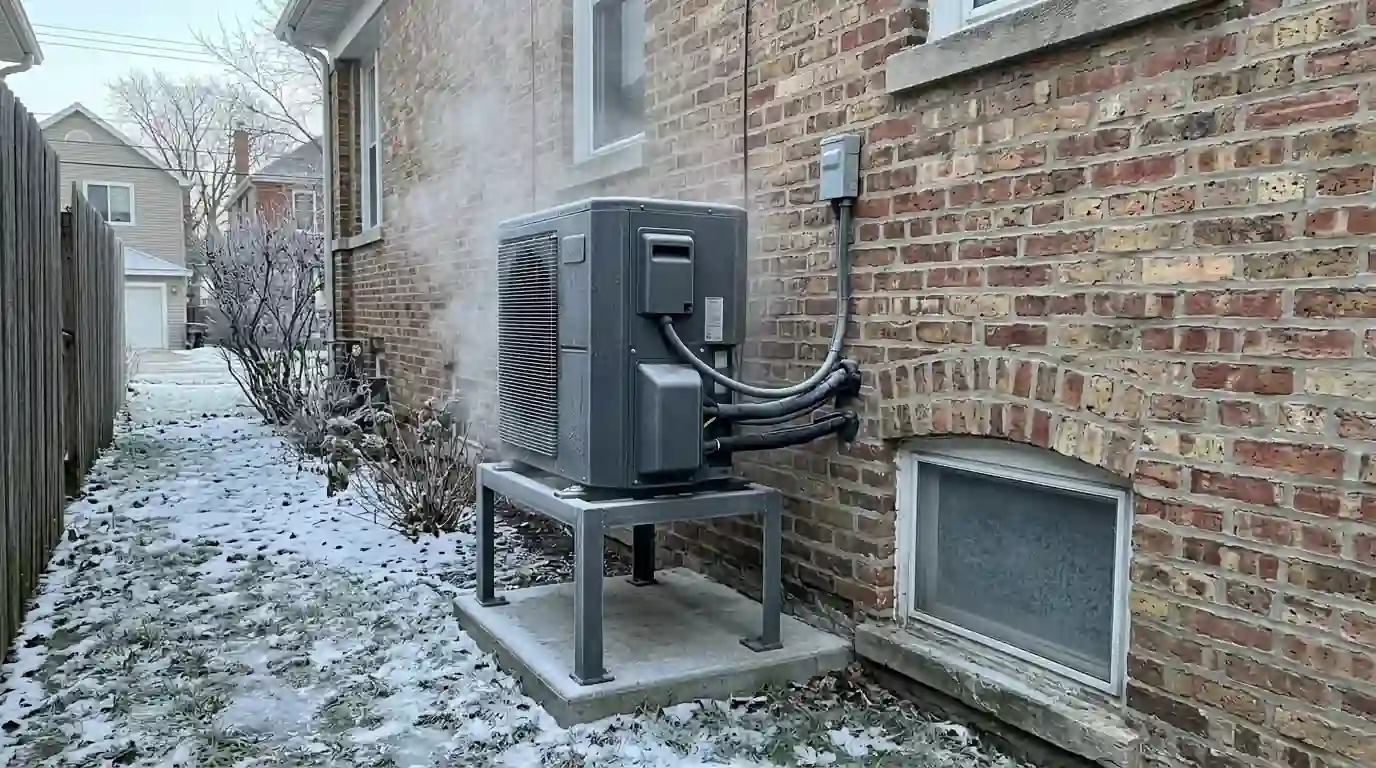
How that fits a Chicago winter
Most of a Chicago heating season is spent between about 15 and 45 degrees, where a cold-climate heat pump is efficient and has plenty of capacity. The challenge is the handful of nights each winter in the single digits or below zero, when the heat pump's output falls and the house needs the most heat.
- A well insulated home may be fine on the heat pump alone with modest electric backup.
- An older, leakier home often does better with a dual-fuel setup that switches to gas in deep cold.
- Sizing to the heating load, not the cooling load, matters more here than in milder climates.
Installation details that matter here
Outdoor units need to sit on a stand above the snow line with room for defrost water to drain. Ice under the coil can block airflow and damage the fan. Ducts need to handle more airflow than many furnace systems were built for, so we check them first.
Incentives change
Utility and federal incentives for heat pumps have changed several times in recent years. We point you to what is current when you get your quote and include the model information you need to apply.
Answers
Quick questions
Will a heat pump raise my electric bill?
Yes, but it lowers or replaces your gas bill. Whether the total goes down depends on your rates, your house and how the system is set up.
Can I keep my gas furnace as backup?
Yes. That is a dual-fuel system, and it is a popular choice in Chicago.