Wait for the weather
Most central air systems should not run until outdoor temperatures have stayed above about 60 degrees for a day or so. Running a compressor in cold weather can damage it. If a warm spell in April tempts you, open windows instead.
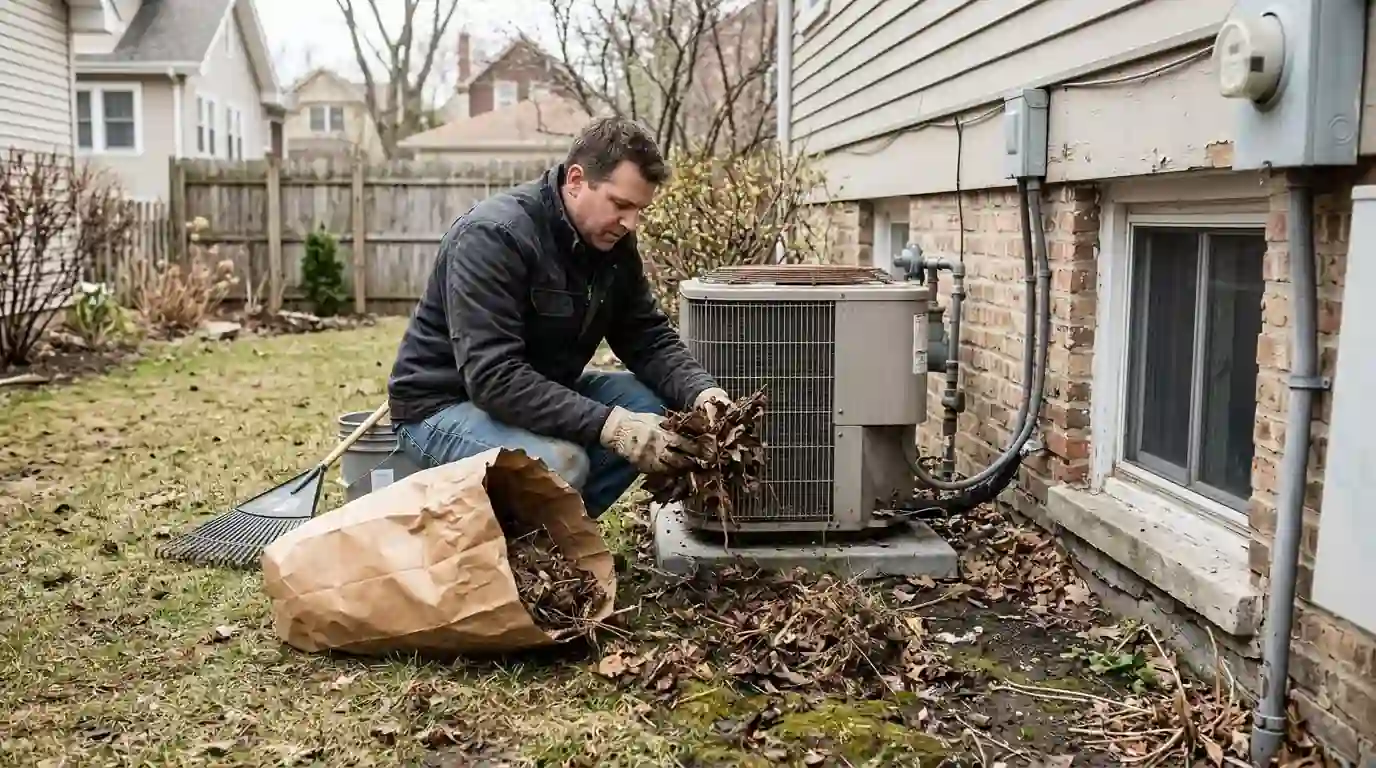
A walk around the outdoor unit
A few minutes outside can head off a summer breakdown.
- Remove any cover and clear leaves, sticks and trash from around and on top of the unit.
- Make sure there are at least two feet of clear space around it.
- Look for bent fins, a tilted pad or chewed wiring from animals over the winter.
- Check that the disconnect box near the unit is closed and the breaker is on.
- Change the furnace filter, since the AC uses the same blower and filter.
Inside at the furnace
The AC coil sits on top of the furnace and drains through a condensate line. Make sure the drain is connected and clear, and that any condensate pump is plugged in. A plugged drain can leak water onto the furnace or floor once the AC starts.
What a spring tune-up adds
A tune-up cleans the outdoor coil properly, tests the capacitor, contactor and motors under load, checks refrigerant pressures and temperature split and tests the drain safety switch. The capacitor test is the big one. Weak capacitors are the most common cause of a July no-cooling call, and they are cheap to replace before they fail.
Answers
Quick questions
Should I cover my AC for the winter?
A cover over the top to keep ice and debris off is fine. Avoid wrapping the whole unit, which traps moisture.
How do I know my AC capacitor is weak?
You usually cannot tell by looking. A meter test during a tune-up shows whether it is within its rating.